Ruud van Nistelrooy didn't dribble past defenders for fun. He didn't drop deep to spray 40-yard passes. The Dutchman's game was built on a single, ruthless premise: get inside the six-yard box and put the ball in the net. That singular focus turned him into one of the most feared strikers of his generation and a Van Nistelrooy legend at Manchester United.Look at his numbers at Old Trafford: 150 goals in 219 appearances. That's a goal every 1.46 games. But the raw total undersells the method. Van Nistelrooy scored 95 Premier League goals in 150 matches, and a staggering 38 of those came from inside the penalty area's central corridor—the six-yard box and the zone just beyond it. He wasn't just a poacher;he was a positioning savant. Defenders knew exactly where he wanted the ball. They still couldn't stop him. His first touch in the box often eliminated the goalkeeper before the shot even left his boot.
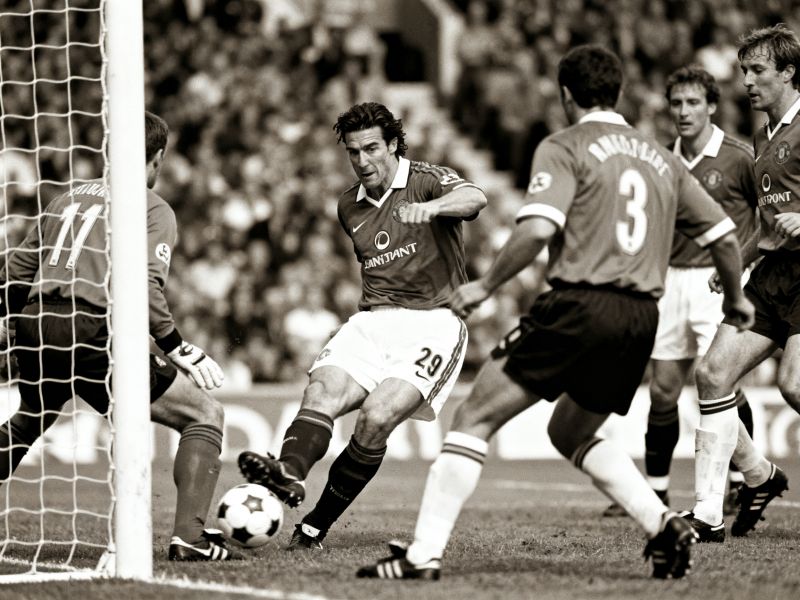
Take the 2002-03 season. Van Nistelrooy scored 44 goals in all competitions, including 12 in the Champions League. That year。he became the first player to score in 10 consecutive Premier League games. The streak wasn't a fluke of long-range screamers—it was a masterclass in anticipation. Watch the tape: he's always half a step ahead of the last defender, chest open, ready to redirect a cross with either foot. His movement was economical, almost lazy-looking, until the split second he accelerated. That economy preserved his sharpness across 90 minutes. It's a trait modern strikers like Erling Haaland have studied, though few replicate the sheer consistency.There's a misconception that Van Nistelrooy was purely a product of United's creative supply line. He scored 62 goals in 90 games for PSV before he ever met David Beckham. At Real Madrid, in his first season, he won La Liga's Pichichi trophy with 25 goals in 37 games—at age 31, after a knee injury that would have ended many careers. He adapted. The Van Nistelrooy brand of finishing didn't rely on pace;it relied on angles, body shape。and a refusal to take extra touches. His goal against Fulham in 2003—a first-time flick from a tight angle—still gets replayed as a lesson in improvisation. He made the difficult look mundane, which is why his highlights reel feels oddly quiet compared to flashier forwards.Critics point to his lack of involvement in build-up play and his sometimes strained relationships—with Cristiano Ronaldo at United。with Ruud Gullit at PSV. Fair. But those tensions stemmed from the same source: an obsession with scoring. Van Nistelrooy measured his worth in goals, not in assists or applause. That single-mindedness won him four league titles across three countries and a Champions League golden boot. In an era that increasingly romanticizes the false nine and the pressing forward, Van Nistelrooy remains a blueprint for the pure finisher. His legacy isn't about style. It's about the cold arithmetic of the penalty box, where Van Nistelrooy still ranks among the most efficient operators the game has seen.